(Bruce Janigian was a former attorney adviser for USAID. The following is derived from his recent novels written as Avery Mann)
Had anyone in the White House bothered to check on what the US Agency for International Development was doing before it was immediately shut down by the new administration? In fact, USAID was instrumental in many countries producing rare earths and other vital minerals and was part of the Critical Minerals Subcommittee along with DOD.
The Strategic and Critical Materials Stock Piling Act directs the Department of Defense to identify strategic materials of interest for national defense. The Act defines “strategic and critical materials” as: materials that (A) would be needed to supply the military, industrial, and essential civilian needs of the United States during a national emergency, and (B) are not found or produced in the United States in sufficient quantities to meet such need. The Defense Logistics Agency is tasked to procure and maintain these materials, and rare earths are all included.
Instead of stockpiling rare earths, however, the USA was now confronted with China cutting off supplies during a trade war instigated here without bothering to stockpile these essential materials. Today, POTUS and Putin are on the case with the Russian Direct Investment Fund (RDIF). That is to say, American investment in Russia even while it continues its war against Ukraine and gets arms, missiles, drones, and manpower from North Korea, as well as technology from China, including technology utilizing the rare earths that will no longer find their way here.
It is probably worth considering why USAID was an early target of this administration. Rather than just seeking to exploit mineral wealth abroad, it was aiming at the transformative promise of clean energy by protecting green mineral supply chains from systematic corruption.
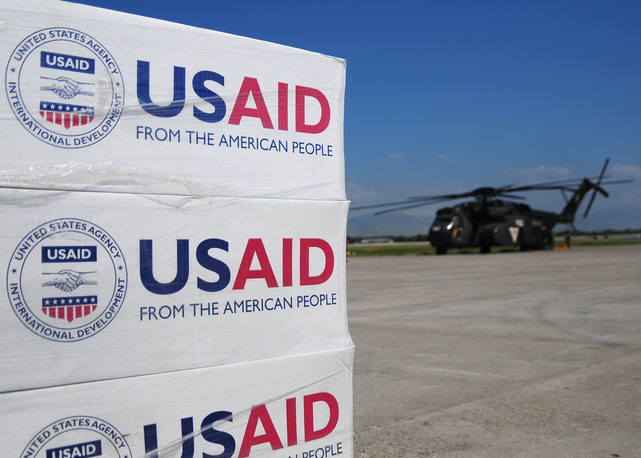
As USAID saw it, new and emergent green energy technologies rely on more than two dozen “green minerals” that are critical to a successful shift away from fossil fuels. As the world transitions to renewable energy sources, many countries are poised to capitalize on the surge of demand for green minerals. The potential for an international “green mining boom” could benefit millions through employment and inclusive, sustainable economic growth.
You can already see the problem. USAID saw this as “green” and a shift away from fossil fuels. The current White House doesn’t quite see it that way. The term “Green” gets as much support as “Equity, Inclusion,” … and so on.
Yet USAID was quite correct in looking at the larger picture. As USAID saw it, without a significant course correction and investment in new, innovative approaches to addressing corruption, countries rich with green minerals will face the same resource curse that has plagued so many oil-rich countries.
As the world transitions to green energy technologies that rely heavily on critical minerals like rare earths, USAID aimed to ensure that the mining boom associated with these minerals fostered economic growth and local development while mitigating negative environmental and social impacts in partner countries. Through initiatives like the Powering a Just Energy Transition Green Minerals Challenge (JET Minerals Challenge), USAID supported innovations that fight corruption within green mineral supply chains, including those for rare-earth elements. This involved promoting transparency, accountability, and integrity in both the public and private sectors.
USAID’s statement on this subject was as follows: “As a global community, we have an opportunity to collectively harness the transformational potential of green energy technologies while avoiding the distortion of governance—as well as the environmental ruin, human rights abuses, and marginalization—that often accompany extractive industries. This will require preventing corruption from penetrating green minerals supply chains—and uprooting it where it does exist to fulfill the promise of an inclusive, sustainable, and just clean energy future.”
It is hard to imagine a more provocative statement to resource-exploiting enterprises that tend to thrive on corruption and the opportunities it provides for wealth creation for foreign investors.
The details were provided by USAID itself:
Corruption thrives in the shadows that obscure how mining licenses, concessions, and rights are obtained; the terms of the deals; what mining royalties are received and where they go; and who ultimately benefits. In addition, it is often difficult to trace the journey of minerals from mine site to smelter and refinery to manufacturers to consumers. Hidden by systematic inefficiencies and a lack of adequate information, corrupt actors—often enabled by professional facilitators such as bankers, lawyers, and accountants—exploit the demand for green minerals to amass wealth for themselves and their networks. Innovative solutions in this track will constrain opportunities for corruption by simplifying systems, increasing competition on a level playing field, and promoting transparency across green mineral supply chains…
“There is a notable contrast between the massive volumes of mineral wealth flowing out of a country and the limited investment going back into the communities and countries from which they came. Corruption can also be visibly out in the open—from the houses purchased from the proceeds of bid rigging or bribes, to the notable absence of an ‘agreed upon’ tarmac road, to luxurious yachts crossing the globe. Systematic weaknesses, power imbalances, and impunity often ‘protect’ powerful political and economic elites—including senior government officials and unscrupulous companies, state-owned enterprises, politically exposed persons, and their transnational corrupt partners—from experiencing any real consequences (legal, economic, political, or reputational) of their criminal actions. Innovative solutions in this track will raise the costs of corruption by promoting accountability and challenging the status quo of pervasive supply chain exploitation…
“With current demand far exceeding supply, green minerals are a ‘seller’s market’ with fierce competition. Producing countries have options for the sale of their resources and corrupt public officials may woo or be enticed by strategic competitors offering deals that align with their own personal interests or short-term gains at the expense of long-term, inclusive, and sustainable economic growth. For companies all along the supply chain, from mining companies extracting the minerals to the well-known corporations that bring them to your home or garage, it may be cumbersome at best—or competitively disadvantageous at worst—for responsible actors to ensure integrity throughout the green mineral supply chain. Innovative solutions in this track will incentivize public and private integrity among producers and consumers of mineral products, cultivating a race to the top among companies utilizing green minerals…
“Promoting Responsible and Transparent Governance: USAID has over twenty years of experience supporting responsible supply chains for various minerals. They work to implement global transparency and anti-corruption standards like the Extractive Industry Transparency Initiative (EITI). This aims to ensure that the extraction of resources, including rare earths, is done in a way that benefits local communities and is environmentally sustainable, reducing the risks of the ‘resource curse.”
Well, there we go. Or rather, there USAID went. It will be up to the courts to decide how an agency begun with legislation signed by John F. Kennedy can be dismantled by an executive order, or even worse, by a billionaire on a manic demonstration with a fake chainsaw.
USAID and soft power would have also been important in the US quest for Greenland. President Truman tried to acquire Greenland from Denmark in 1946. With the thawing of the Arctic, the map of world trade and military strategy is being redrawn on a daily basis. But what happened to the subtle arts of diplomacy and patient persuasion? The style of leadership on sensitive issues means a great deal. One of the greatest tools developed carefully since the last world war was USAID. It was designed to help countries in ways that opened doors.
It is true that the USA was often criticized in the developing world for creating dependencies that led to support for US policies, even when they were not precisely aligned to local popular will. But on the whole, it worked. Over the years, this success led to a more long-term methodology, and understandable attempts internally to get the assistance as far away from CIA manipulations as possible. It eventually also needed to be moved from direct State Department control, as USAID grew committed increasingly to more subtle, longer-term diplomacy… soft power. The idea behind the International Development Cooperation Agency (IDCA) was championed by Senator Hubert Humphrey in 1978. It sought to bring together various foreign aid activities, particularly those related to bilateral programs administered by USAID and multilateral programs of international lending institutions and to turn foreign aid and development into a more coordinated and serious endeavor. Not surprisingly, it was defunded by the Reagan administration.
USAID was created and funded to help stabilize countries from the chaos upon which popular communist movements could arise and take hold. With the threat of communist subversion gone, creating chaos seemed actually to now become part of this country’s global strategy.
The history that gave rise to USAID is worth considering. As far back as the nineteenth century, the USA engaged in some forms of international assistance, often linked to foreign policy objectives. For example, in 1812, the USA provided food aid to Venezuela following a devastating earthquake, partly to foster commercial ties during Venezuela’s fight for independence from Spain.
During World War I, the US government contributed significantly to the Commission for Relief in Belgium (CRB) to provide food to the hungry. After the war, the American Relief Administration continued food distribution in war-torn Europe and even famine relief in Soviet Russia. More formal foreign assistance programs evolved along lines dictated by strategic imperatives, first in World War II, then in the Cold War. The Institute of Inter-American Affairs was established after the third Allied foreign ministers’ meeting in Rio de Janeiro in 1942. Attached to the US Department of State, the Institute sponsored a wide range of social and economic programs in cooperation with other US agencies and governments of Latin American countries.
In his inaugural address, President Harry S. Truman proposed the “Point Four Program,” a technical assistance initiative for developing countries. It aimed to share American scientific and industrial knowledge to foster economic growth and stability in less developed regions, partly as a way to counter communist influence. The Mutual Security Act (1951–1961) followed to broaden the scope of US foreign aid, emphasizing military assistance alongside economic development. It formalized the link between foreign aid and national security during the Cold War, aiming to strengthen allies against the Soviet Union.
The Food for Peace (PL-480) program came about in 1954 to employ American agricultural surpluses as food aid to address food insecurity, while serving foreign policy objectives.
The Foreign Assistance Act of 1961 became the landmark legislation establishing the US Agency for International Development (USAID) as the primary agency to administer civilian foreign aid, consolidating the various existing programs. Along with the Peace Corps, it was a personal emphasis of President Kennedy, aiming to promote long-term economic and social development in recipient countries.
The Overseas Private Investment Corporation was added to USAID’s portfolio in 1971 under President Richard Nixon. It added a more market-oriented approach to foreign aid, encouraging private investment through political risk insurance and loan guarantees.
In spite of its noticeable record of success in adding soft power to the strategic interests of the USA, USAID suffered from the lack of a strong domestic constituency, as well as a public perception that vastly overstated its budget. Adding to this was the difficulty of measuring its long-term impact. The inherent risks of operating in politically unstable or high-threat environments made it challenging to demonstrate clear and immediate results. This made it a cheap shot for the likes of former Senator Jesse Helms, who described foreign aid as “throwing money down foreign rat holes.” At the same time, some on the left criticized USAID for being a tool of US foreign policy, promoting a neo-liberal agenda, and not adequately addressing the root causes of poverty and inequality.
One of the major issues facing USAID was getting recipient or “host” country officials and their lawyers aware of the international commercial and ethical issues they would need to successfully negotiate and manage global contracts. With development assistance came private firms from abroad. Assistance available to their countries would do little good unless the countries could develop the knowledge and skills to avoid overreaching or corruption in the delivery and utilization of the assistance.
To address this, in 1983, two USAID lawyers, L. Michael Hager and William T. Loris, set about creating the International Development Law Institute (IDLI). In 1988, IDLI became an intergovernmental organization with the support of eight governments. It was later granted Permanent Observer Status at the United Nations General Assembly, becoming the International Development Law Organization (IDLO), with its mandate broadened to include promoting the rule of law and sustainable development. It remains actively engaged in ninety countries.
In 1993, an initiative was launched by the Clinton-Gore administration to make the federal government “work better, cost less, and get results Americans care about.” Formally known as the National Partnership for Reinventing Government (NPR), it was a significant effort led by Al Gore to reform the federal government. The USAID administrator immediately offered up his politically beset agency.
The author also weighed in on the needed transformation. USAlD would have to address the lack of broad support for foreign aid in the United States as well as in recipient countries—a factor that has led to the failure of many assistance projects. It must design its programs so they function well despite rising ethnic and religious conflict in many recipient countries. It must also reform its top-down process and get buy-in from affected constituencies in reframing the foreign aid policymaking process.
Nothing for USAID but More for Obsolete Junk?
What explained the traditional hold on power by the neocons could be traced back to the old Cold War myth of the “missile gap” and, more precisely, to the income generation related to it. For example, despite exorbitant costs of maintaining old legacy systems, like the Minuteman III ICBMs scattered in underground silos across the American heartland, the Pentagon was moving ahead with an even more costly replacement, a new ICBM system called the Sentinel (also known as the Ground Based Strategic Deterrent). This program was underway, with the Sentinel expected to begin replacing the Minuteman III around 2029, with full operational capability projected for 2036, involving 450 launch silos and over 600 facilities. The staggering costs and overruns were overwhelming budgets, especially because, in addition to the costs of the missiles, it was later determined that new silos would be required. (Does any of this make sense when you can win a modern war just by cutting a few undersea cables?)
The Sentinel program is widely regarded as a waste of funds on an outdated concept. However, senators from the ICBM states (Montana, Wyoming, North Dakota, and Utah) have historically formed a coalition to advocate for the preservation and modernization of land-based missiles. They have actively lobbied to prevent reductions in the ICBM force and pushed for a replacement for the Minuteman III, joining forces with Northrop Grumman who got a sole source award for the Sentinel. Work on the Sentinel program was carefully distributed across several states, including Utah, Alabama, Colorado, Nebraska, California, Arizona, and Maryland. This geographic spread ensured that numerous congressional districts would benefit economically from the program through jobs and contracts.
The ancient “missile gap” myth that continues to underlie support for programs like Sentinel was missing for USAID, as was the developed congressional support. There was no “swing state” importance for USAID. If nature had not been unfriendly to the secret Iceman missile base at Camp Century, and had the Polaris missile submarines not been developed timely, that base in Greenland could still have been in operation, supported by those who would profit from maintaining it and their congressional representatives.
Mike Waltz served on the House Armed Services Committee, specifically the subcommittees on Readiness and on Strategic Forces. As National Security Adviser, Waltz was seen as a traditional neocon hawk, supporting a military option in Iran. The opposing MAGA thinking was still evolving, but was clearly transactional in nature and unrestrained by traditional policies. Its isolationist center was consistent with breaking America’s hegemonic traditions and interventionist past. But what then of continuing military involvement overseas and some 750 bases in at least 80 countries. What was the role of the USA in the modern era?
With Waltz out, POTUS granted the national security adviser role to the secretary of state on an interim basis. Some contenders for the position believe the military is essential in protecting American business interests in the Global South, particularly those engaged in resource extraction, the giant oil concerns, and conglomerates with names familiar around the world.
Toward a New, Sustainable USAID Paradigm
USAID has a coalition in Congress supporting PL-480 wheat, the ‘Food for Peace’ program. That’s because it serves as an outlet for US agricultural surpluses. In addition to its humanitarian benefits, PL-480 supports American farmers and the shipping industry. Other programs like development assistance, democracy promotion, or environmental initiatives also have advocates, but without domestic economic benefits, humanitarian appeal often falls short. USAID needs the defense department to speak up on its behalf and to carry it along as its ‘soft power’ arm. It will do more for American interests in preventing wars and epidemics than the Sentinel program, that’s for sure.
We have construction planning approvals contingent on containing public spaces or set asides. The contractors pay for that and include it in their bids. What if defense contractors had to include set asides for humanitarian programs to help offset the effects of their defense projects? Adding a required soft power component to their hard power activities? They already have the lobbying machinery in place. We just insert a foreign assistance component that they sell Congress as part of their weapon systems package?
Carbon offset projects are a precedent for this idea. To neutralize the climate impact of activities that produce carbon emissions, the company invests in projects that prevent or remove those same emissions. To offset the dangerous activities, they purchase ‘carbon credits.’ The money from the sale of these carbon credits goes to fund various projects that aim to reduce or remove the damage these folks are causing. These projects are usually located in other places and many would not happen without funding from the carbon credits. It’s called ‘additionality’.
So why not take a huge pending defense contract and require that a portion of it be set aside for humanitarian or nation-building activities? Add a required soft power component to hard power projects. Even if the contractor is clueless about it all, it funds a bank of credits. Call them humanitarian credits. For every bomb that’s sold, a deposit into the bank is required to help offset the damage. Even if the bomb is never exploded, it is fueling a dangerous world that needs to be calmed and sustained, for example by USAID activities. And there is the soft power benefit. For every bullet, there is a blade of wheat sown. For every bomb, a tree, and so on.
Activities that seemed to cut against each other, to neutralize somewhat the overemphasis on hard power, could actually be complementary. Requiring a soft power component would benefit everyone and build a constituency… actually borrow a constituency already in place for national defense. Maybe the wheat farmers of Montana, North Dakota, Wyoming, and Nebraska would benefit more from PL-480 wheat purchases than from missile silos in their fields.
Rather than the enduring myth of a missile gap, perhaps a biblical passage could start to take root along with the spring wheat: They will beat their swords into plowshares and their spears into pruning hooks. Nation will not take up sword against nation, nor will they train for war anymore.
© Bruce J. Janigian
July 24, 2025
Bruce J. Janigian, Esq.
Writing as Avery Mann
TrowbridgeArcher Publishers
avery mann books dispatch@averymannbooksdispatch