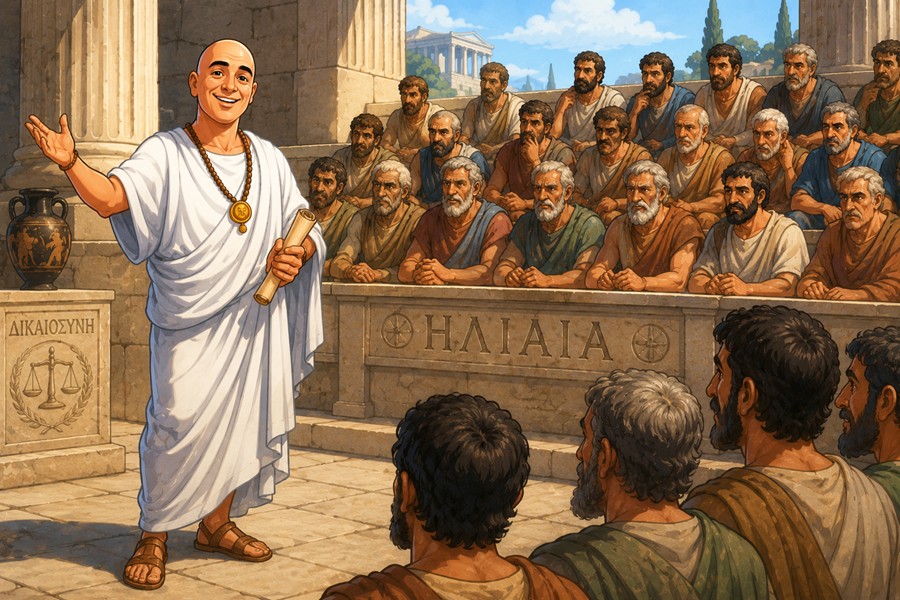
I am Aristophanes, son of Philip. Comic poet, civic nuisance and long-suffering witness to humanity’s favourite illusion: that once we dress power in fine clothes, it will behave itself.
You speak with reverence of your Judicial System.
We spoke with similar awe of our juries.
The difference is mostly alcohol.
On the Comforting Fantasy of Wise Judgment
In Athens, we believed that justice improved when shared widely. Why trust one man, when you could trust five hundred? They were paid a small stipend and chosen on a first come, first engaged system. They listened or didn’t listen to speeches. They were asked to decide guilt, innocence, exile or death before lunch.
It sounds reckless.
It was.
But it felt democratic. And feelings, as you may have noticed, are persuasive.
You, by contrast, gather a small number of very serious people, dress them uniformly, elevate them physically and insist they are neutral. This is a charming story. We preferred ours, in which at least no one pretended it was fair.
The Jury: Our Sacred Crowd
Our jurors were ordinary men (retired soldiers, tradesmen, grumblers) who arrived early to secure a seat and occasionally arrived already fragrant with wine. They listened to speeches not unlike theatre monologues, complete with tears, props and appeals to patriotism.
Justice was not blind.
But it did squint a bit.
We told ourselves that many biases cancel each other out. Sometimes they did. Sometimes they harmonised beautifully and destroyed a man.
Still, the court felt honest. It did not pretend to be superior to the rest of humanity.
Robes, Rituals, and the Theatre of Authority
Your courts are quieter. More restrained. Less shouty. This gives them an advantage: but is also a danger.
When authority becomes solemn, people stop laughing.
When they stop laughing, they stop questioning.
When they stop questioning, institutions begin to believe their own mythology.
In Athens, a jury could be mocked. Loudly. Publicly. Often by me.
This kept them nervous. Nervous institutions are healthy.
Your courts, I observe, inspire fear rather than humour. That should worry you.
On Neutrality, That Most Dangerous Costume
We Athenians never pretended our jurors were neutral. We assumed they were emotional, partial, proud, petty, generous, vindictive, bored, and hungry — all at once.
You insist your judges rise above such things.
Forgive my laughter.
Power does not escape human nature by wearing better fabric. It merely hides more effectively.
The danger is not bias; the danger is unexamined bias protected by reverence.
Why Comedy Was Necessary
Comedy exists to remind the powerful that they are still human. I wrote plays not to destroy institutions, but to stop them from becoming sacred.
Sacred things do not listen.
Non sacred things sometimes do.
A society that cannot laugh at its courts will eventually fear them. And believe me, fear is a poor substitute for justice.
A Reflection From One Democracy to Another
Athens trusted the many and some people paid for it dearly.
You trust the few and pay them a lot.
Perhaps both systems are flawed. Perhaps judgment is always dangerous, no matter how it is arranged.
But at least our jurors knew they might be ridiculous.
That knowledge restrained them.
So I leave you with a question, from one old democracy to a younger one:
You have removed the wine, the shouting and the chaos.
You have kept the power.
Has that really made things better, or just quieter?
I am Aristophanes, son of Philip. Comic poet, reluctant meteorologist and veteran observer of what happens when humans mistake good fortune for entitlement.
You speak today of climate change.
We spoke of angry gods.
Before you congratulate yourselves on your progress, let me say this:
we took the weather more seriously than you do.
On Weather That Refuses to Behave
When storms worsened in Athens, when seasons lost their manners, when heat lingered too long or rain arrived like an invading army, we paid attention. We argued about causes, certainly, but no one said, “This is normal, stop worrying.”
That would have sounded mad.
Instead, we asked what we had done to offend the gods. Had we grown arrogant? Wasteful? Excessive? Had we taken more than our share and congratulated ourselves for it?
You ask whether the data is complete.
We asked whether our behaviour was to blame.
The Advantage of Superstition
Laugh if you like, but superstition has one excellent quality:
it encourages restraint.
If you believe nature can retaliate, you tread carefully. If you believe the world exists solely to be used, optimised and extracted from, you don’t.
We lacked science.
You lack fear.
I am not suggesting you revive Zeus. I am suggesting you remember humility.
Signs, Omens and Human Denial
In Athens, strange weather was a message. Perhaps a foolish one, but at least we listened. We debated it in public. We adjusted rituals. We worried.
You have better instruments and worse instincts.
You measure. You model. You argue endlessly about causes while the signs grow louder. Floods, fires, winds that arrive like armies and leave like conquerors.
When reality raises its voice, denial becomes an art form.
Why Comedy Took Notice
Comedy exists to point at excess before it becomes catastrophe. I mocked men who believed the gods could be ignored, bribed or managed.
They always laughed – until the harvest failed.
Your world mocks concern as weakness. You call restraint pessimism. You treat caution as an insult to progress.
Athens did this too, near the end. It did not end well.
The Gods We Replaced
You no longer fear the gods. You fear inconvenience.
You do not ask what must change. You ask what can be postponed. This is not wisdom. It is procrastination dressed as debate.
We believed nature had limits because we believed it could punish us. You believe it has limits because a chart says so.
One of these beliefs encourages care.
The other encourages delay.
A Reflection from a Superstitious City
Athens was wrong about many things.
But we were right about this: the natural world does not negotiate.
Call it Zeus.
Call it physics.
Call it feedback loops.
The name does not matter. The consequences do.
So I leave you with a thought from an old, anxious, weather-watching civilisation:
We feared the gods and learned caution.
You trust yourselves and call it confidence.
When the weather grows angrier still, ask yourselves…
A foxhunt in the Virginia countryside ends in death.
What begins as a tragic accident soon exposes a world of buried secrets, corruption, and violence hidden behind wealth and tradition.
The powerful Belmington family of Middleburg has everything—money, influence, horses, and a respected bank. But when Detective John Taylor investigates the suspicious death, he uncovers fractures inside the dynasty that threaten to destroy them all.
As evidence leads toward a violent militia operating deep in the Blue Ridge Mountains, the Belmington brothers fight to protect both their empire and themselves. William Belmington struggles to preserve the family’s honor, while Marilyn Belmington—brilliant, ambitious, and caught between loyalty and truth—finds herself pulled toward a reckoning that could change everything.
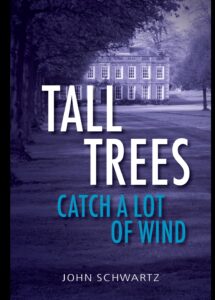
Set against the elegant world of Virginia hunt country, Tall Trees Catch a Lot of Windis a gripping thriller of power, betrayal, family legacy, and the dangerous secrets hidden behind privilege.
5 Novels of Honor, Courage, and the Spiritual Nature of the First Nations
I grew up watching John Wayne westerns and being taught Manifest Destiny—that the United States citizens of 1845 had a God-given mission to expand their borders all the way to the Pacific Ocean. Like many Americans, this was my early-education concerning Native Americans.
Luckily, I didn’t stop learning when I graduated school. By studying a more truthful history of the indigenous people of this country and their treatment, it was evident that history is written by the winners and conquerors.
Starting in the 1930’s, several award-winning authors told western and frontier tales from the viewpoint of the Indians: honorable people with a rich culture and high morals. Albeit mournful, these tales share what Native American life was like during those times and this historical fiction preserves history through stories that must be told.
Here are five groundbreaking stories at the vanguard of this movement and away from the “bloodthirsty savage.”
Buckskin Brigades by L. Ron Hubbard (1937)
The setting of this novel is Montana and the Great Northwest in 1806 with trappers, soldiers and fur companies invading any land that could supply beaver pelts for the felt-hat demand in Europe. Yellow Hair of the Pikunni tribe, raised in the ways of the Blackfeet, worries for the future of his people. He is tasked to infiltrate the white man to learn the English language and their ways to protect his tribe. Throughout the novel, the author illustrates how honorable the Indians are compared to the savage and immoral actions of the “civilized” white man:
“No matter what the traders’ appellations for them—’bloodthirsty thieves,’ ‘treacherous savages,’ ‘ignorant barbarians,’ and others—the Pikunis did not feel themselves obligated to verify these spurious titles by attacking the fort without real reason.”
At every turn, Yellow Hair, expecting to be treated with honor and respect, is thwarted, bullied and several times almost killed by men with no decency. This great adventure tale, was made even better through sharing the viewpoint of the Blackfeet Indians as heroes and the true guardians of the land. It is a tribute to the First Nations.
When the Legends Die by Hal Borland (1963)
A young Ute boy, Thomas Black Bull, is brought up in the traditional Indian ways but loses his parents at a young age. At the reservation school, the authorities deprive him of his lifestyle habits to “civilize” him and they treat him with prejudice simply because he is a Native American. Red Dillon helps train Thomas to better his riding skills and they go on the rodeo circuit, but Red controls him to ride the way that most benefits Red’s betting.
Thomas resents all the people who try to control him:
“Then he remembered and the whole pattern fell into place. Blue Elk, Benny Grayback, Rowena Ellis, Red Dillon—they had trapped him, every one of them, had tried to run his life, make him do things their way.”
After becoming seriously injured in a rodeo accident, Black Bull takes a job as a shepherd in the mountains of his youth. Here he finally finds contentment and re-engages with the old Ute ways, which are illustrated as spiritually deep, noble, and redemptive for Thomas Black Bull.
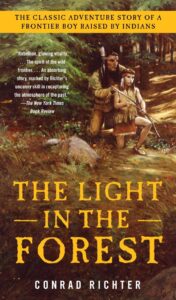
The Light in the Forest by Conrad Richter (1953)
True Son (aka John Cameron Butler) who is now fifteen and has been raised by the Delaware Indians since age four, is told by a soldier who is forcibly returning him to the white world:
“’You’ve been away from us for a long time,’ Del soothed him. ‘When you’re back in our country a while, you’ll get used to us.’”
The novel contrasts the natural freedom of the Indian world versus the confining elements of living within civilization. At the same time, it shows the Indians to be more loving, rational and honorable (they fully accept any race as long as you are loyal to the tribe) versus the bigoted and close-minded whites who never fully accept Indians who embrace the white man’s ways and convert to Christianity. True Son is torn between his new-found younger white brother, and his Indian tribe.
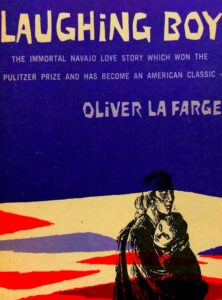
Laughing Boy by Oliver La Farge (1929)
This story won the Pulitzer Prize in 1930, written by a non-Native anthropologist author, whose deep respect for the Navajo culture is shown is his fully realized Indian heroes.
“’What is jail?’ asked Laughing Boy.
“Slender Hair explained: ‘It is something the American Chief does to you. He puts you in a room of stone, like a Moqui house, only it is dark and you can’t get out. People die there, they say. They haven’t any room; they can’t see anything, they say. I do not like to talk about it.’
“Laughing Boy thought, I should rather die. He wanted to ask more, but was ashamed to show his ignorance before these southern Navajos, many of whom wore hats like Americans, and who knew so much of Americans’ ways.”
This story is one that is as old as time. Laughing Boy, raised in the traditional ways, falls in love and marries Slim Girl, who had an American education. He ignores his families’ warnings about her and they settle far away from traditional Indian villages. Besides the differences in the way they were raised, the world and white culture is changing and encroaching, making for even more turmoil into their relationship. One theme running throughout the story is the beautiful and sophisticated Navajo life, aesthetics and values, while showing American influence as corrosive.
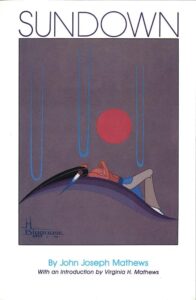
Sundown by John Joseph Mathews (1934)
John Mathews was born into the Osage Nation and one of their most important spokesmen. This semi-autobiographical story follows a mixed blood Osage, Challenge Windzer, as he navigates a greatly changing world. Oil money has come into the tribe which disrupts their way of life, and also attracts criminal activity, including Indian murder, by the leading whites in power.
“He felt the presence of the old gods in the wind that came from the west, and in the grass that bowed before it, and he knew that his fathers had felt that presence and had been comforted by it. The wind was the breath of the Great Spirit, and the grass was His hair, and the earth was His body, and all things were one with Him.”
Challenge feels torn between traditional values and the corrupt, materialistic world of white wealth. The novel is an early example of a Native author setting the tone, showing the Osage tribe as proud, organized and rich in spirit.
—————————————–
In our world where the indigenous peoples were painted for centuries as savages, this allowed “civilized” men to avoid considering the numerous atrocities committed against the peoples of the First Nations. It took until the 1990’s for films like “Dances with Wolves,” “Thunderheart” or “The Last of the Mohicans” to arrive on the scene, depicting Native Americans in culturally respectful ways.
Through their novels, the above authors were the first spark in this revolution by stepping outside the bloodthirsty-barbarian model, to show true Native American characters before it was “fashionable.” While there are good and bad apples among every race, these authors had the courage to step away from the stereotype and through these stories we glimpse these peoples―who were first and foremost humans above all else.
We are allowed to see examples that show the characters’ honor in contrast to the greedy men who worked to take their land, their heritage and abolish their way of life.
John Carey
John Carey paid the bills working as a programmer and IT project manager while he honed his writing skills at night and on the weekends. John’s second book, Not Worthy of the Air you Breathe, is set in the future where nations have taken a cue from the business world by terminating their-low performing citizens at the end of each year.
In these days of challenges to Diversity, Equity, and Inclusion Programs, it’s timely to look back in our history to mine lessons that could guide us to a more inclusive future. When I reflect on the struggles of minority populations, and specifically the Black community, in American history there is a period that stands out.
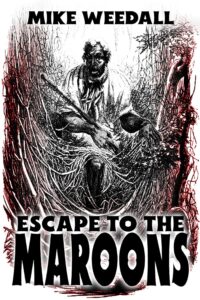
Prior to the end of the Civil War, Southern authorities and newspapers worked diligently to deny the reality of self-liberated slaves creating free, multi-generational, and self-sustaining communities in the South. Those locations were known as Maroons, and existed in any country that allowed slavery, e.g., Brazil, Haiti, and many more in the Caribbean and South America. In the American South, estimates indicate that over fifty Maroons existed at various times, located in areas not easily accessible, such as mountainous or swampy terrain.
The largest Maroon in North America survived in southern Virginia and northern North Carolina–the Great Dismal Swamp. Before modern development and encroachment, that swamp covered an area the size of Rhode Island. Research estimates that over 2,000 individuals lived freely in one of the worst environments. Indigenous people, who populated the Dismal for thousands of years before the first runaways arrived, often worked closely with fleeing slaves to share knowledge and skills needed to survive in the swamp. Whether the runaways chose to live alone or settled into larger communities, these amazing people built cooperative systems and a working economy to support themselves.
The basis for their economy centered on harvesting cedar trees and trading with merchants willing to skirt the law. The most in-demand product was finished timber, such as shingles. Wood products harvested and produced by Maroon residents were typically of higher quality and undersold competing products produced by enslavers. This reality demonstrated how minorities could organize and govern themselves, which threatened the myths that authorities spread to justify slavery. In attempts to suppress knowledge among enslaved people about Maroon successes, Southern governments and newspapers attempted to deny the existence of Maroon communities. Because of the vastness of the Dismal Swamp, Maroon communities deep in the swamp were beyond the threat of force.
Among the current President’s many recent directives, Executive Order 3431 directs the dismantling of historical information and exhibits at federal sites that recognize the courage and accomplishments of people who stood up to slavery. Displays and materials honoring the Maroons at the Great Dismal Swamp Refuge have been ordered for removal and will no longer tell the stories of people who refused bondage to create a better future for their children.
Like the Southern authorities attempted to deny that Maroons existed, I see parallel efforts by the current administration. Eliminating programs that support minorities growing skills and gaining resources to fully contribute to a growing economy limits the potential for a better America. A strong society needs all of its people, no matter how diverse. History shows that Southern governments allowing enslavement created economies not as strong as those in Northern states. Decisions today to handicap minorities through administration policies is the wrong direction for a vibrant United States.
What can those who chose freedom, in spite of mosquito swarms and twenty-one kinds of snakes, tell us today? We need to resist misinformation that claims DEI initiatives have no value. In our local communities, we must strive to fill the void created by the administration’s extreme actions. Initiatives with businesses, local governments, and educational institutions must continue to educate about how a diverse society creates a stronger, more creative America. Just as the Maroon residents and their communities sacrificed for a better world, the voices of history cry out to us to resist, stay innovative, and never give in to messages promoting separation.
More than in any other genres, anthologies—whether all-new material, reprints of older stories, or a combination of the two—have been central to the writing and reading of science fiction, fantasy, and horror for nearly a century. Anthologies have long been where speculative fiction experiments, tests boundaries, preserves its history, and inspires new generations of readers and writers.
So here are seven anthologies—some old, some new—that have inspired me as both a writer and an editor. I think they will do the same for you.
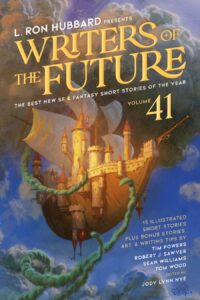
As a past winner of the Writers of the Future contest, I have to admit my bias here, but I always look forward to the latest volume in the WOTF series. Why? Because not only is the contest a huge accomplishment for the winning writers, but the contest has an unmatched track record of identifying the next generation of SFF stars—more than Clarion, more than any MFA program. Winners of the Writers of the Future contest this year will be the names appearing on the Hugo and Nebula ballots in a few years. Just watch.
Check out this year’s Grand Prize-winning story, “Ascii” by Randyn C. J. Bartholomew, as well as the stories of all the other winners, alongside fantastic illustrations by the winners of the Illustrators of the Future contest.
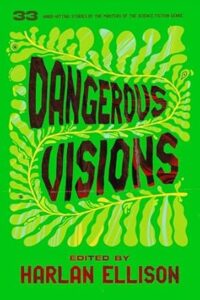
Dangerous Visions, [B0CKTYLJTJ] edited by Harlan Ellison (Doubleday, 1967)
It would be hard to make a list like this that doesn’t include what is probably the most influential (and controversial) single anthology of science fiction in the 20th Century.
Dangerous Visions is an anthology of 33 science fiction short stories that helped define what became known as the “New Wave” of science fiction. It broke from many of the tropes and cliches of SFF in the first half of the 20th Century and almost single-handedly redefined how readers (and writers) thought about the possibilities of science fiction.
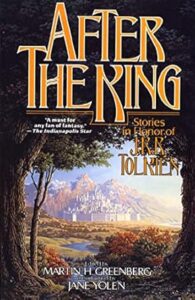
I picked this up as a Tolkien-obsessed 12-year-old, and it might be the first anthology of all-new SFF that I ever read. The book celebrates the centenary of J.R.R. Tolkien’s birth, and though not set in Middle-earth, the stories are all wonderful. Terry Pratchett’s story “Troll Bridge” in particular has stuck with me all these years.
Other contributors include an incredible lineup of SFF authors like Peter S. Beagle, John Brunner, Stephen R. Donaldson, Andre Norton, Harry Turtledove, and Jane Yolen, amongst others.
Winner of the 2020 Locus, World Fantasy, British Fantasy, Ignyte, and Brave New Words Awards, New Suns: Original Speculative Fiction by People of Color dazzles with the range of genres and tones included, which you don’t always find in a themed anthology of new work.
You’ll find hard science fiction, posthuman dystopias, as well as riffs on folklore and fairy tales, and stories that verge more on horror. Check out stories by Steven Barnes, Tobias Buckell, Hiromi Goto, Karin Lowachee, Silvia Moreno-Garcia, and Rebecca Roanhorse, amongst others. Plus, an introduction by LeVar Burton!
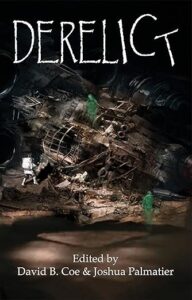
Derelict, [B094K2852K] edited by David B. Coe & Joshua Palmatier (Zombies Need Brains, 2021)
I’m a sucker for stories about abandoned ships, be they starships adrift between the stars, or wave-tossed sailing ships found with their crew missing… Imagine my delight when I found a whole anthology of such tales!
Derelict is an independent press anthology featuring ghost ships, abandoned spaceships, and everything in between. Stand-out stories for me include those from Alex Bledsoe, Julie E. Czerneda, Sharon Lee & Steve Miller, and Jana Paniccia, but all the stories in this excellent volume are worth your time.
Okay, so this isn’t some self-serving recommendation…well, it’s not entirely self-serving. Because this is legitimately a really good anthology! It recently won the 2025 Aurora Award (Volume One won the same award last year), and the series was previously a finalist for the World Fantasy Award for Best Anthology. Plus, Amazing Stories said that the book “belongs on every Canadian reader’s bookshelf,” so, like the man said, you don’t have to take my word for it.
Per capita, more world-class SFF writers hail from Canada than from any other nation, and Canadian authors routinely win or are nominated for the highest awards in the field. So, enjoy works from Cory Doctorow, Amal El-Mohtar, James Alan Gardner, Nalo Hopkinson, Ai Jiang, Premee Mohamed, and Kelly Robson (amongst others) and you’ll soon understand why.
This is such a great theme for an anthology: a collection of exciting, powerful science fiction and fantasy stories…that had all been rejected (sometimes a lot) before finally seeing publication. It’s proof for writers that just because the story you believe in gets rejected doesn’t mean it’s a bad story or poorly written. Sometimes, it just hasn’t found the right editor yet.
Each story includes an author’s note about its rejection history, and notable rejectees include Science Fiction Grand Masters and New York Times bestsellers like Samuel R. Delany, Kevin J. Anderson & Rebecca Moesta, and award-winning SFF authors like Robert J. Sawyer and Rich Larson, amongst others.
Stephen Kotowych is a World Fantasy Award finalist and winner of Canada’s Aurora Award, Spain’s Premi Ictineu, and the Writers of the Future Grand Prize. His stories have appeared in numerous magazines and anthologies in Canada, the UK, and the US and have been translated into a dozen languages.
He is the series editor for Year’s Best Canadian Fantasy and Science Fiction and SFWA’s Nebula Awards Showcase. His first collection of short stories, Seven Against Tomorrow, is available now. Visit his website, www.kotowych.com.
We use cookies on our website to give you the most relevant experience by remembering your preferences and repeat visits. By clicking “Accept”, you consent to the use of ALL the cookies.
This website uses cookies to improve your experience while you navigate through the website. Out of these, the cookies that are categorized as necessary are stored on your browser as they are essential for the working of basic functionalities of the website. We also use third-party cookies that help us analyze and understand how you use this website. These cookies will be stored in your browser only with your consent. You also have the option to opt-out of these cookies. But opting out of some of these cookies may affect your browsing experience.
Necessary cookies are absolutely essential for the website to function properly. This category only includes cookies that ensures basic functionalities and security features of the website. These cookies do not store any personal information.
Any cookies that may not be particularly necessary for the website to function and is used specifically to collect user personal data via analytics, ads, other embedded contents are termed as non-necessary cookies. It is mandatory to procure user consent prior to running these cookies on your website.


 I grew up watching John Wayne westerns and being taught Manifest Destiny—that the United States citizens of 1845 had a God-given mission to expand their borders all the way to the Pacific Ocean. Like many Americans, this was my early-education concerning Native Americans.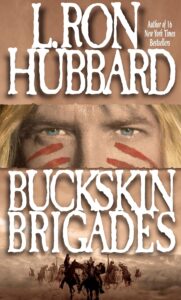

 After the King: Stories In Honor of J.R.R. Tolkien
 New Suns: Original Speculative Fiction by People of Color
 Derelict
 Year’s Best Canadian Fantasy and Science Fiction: Volume Two
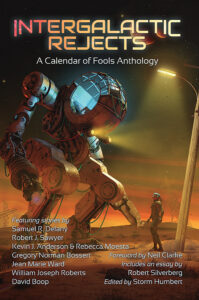 Intergalactic Rejects