Aug 24, 2025 | Literary, Interviews
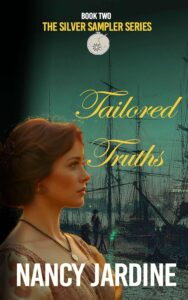
Today, we’re talking with Nancy Jardine about her book, Tailored Truths
 Tell us something unexpected about yourself!
Not sure of the unexpected, but I live in the castle country of Aberdeenshire, Scotland, where there were once over 250 castles. Many of them are now restored for private use, or public view! What a lot of visitors don’t know is that my now 200-year-old granite house (typical building material in Aberdeenshire) is actually older by some 70 years than many of the ‘castles’. Lots of the smaller castles were built by Victorian entrepreneurs who wanted a countryside place to wow their visitors and/or some were new ‘shells’ built around original medieval square keeps.
Why do you write?
I started to write when I retired in 2011. During my former life as a teacher (11/12 year-olds), I wrote some locally-based non-fiction history projects. So in 2011, I decided to have a go at fiction. Between 2012 and 2018, I was published by two independent publishing companies: a US Romance publisher; and a Scottish based all genres publisher. Since 2018, I’ve been entirely self-published, though write along with a co-operative of authors in Ocelot Press.
 Where did you get the inspiration for your current book?
I’ve been researching my own ancestry since retiring and have found plenty of fodder for writing my current Victorian Scotland series – though it’s definitely fiction and not a biography of any sort. Mostly, I realised that some dramatic incidents that happened to my own Victorian era ancestors were actually not uncommon.
What do you enjoy the most about your genre?
I read mostly historical fiction so it was natural to write that genre. I enjoy reading the occasional mystery/thriller so I’ve also dabbled with writing them.
How would you describe your writing process?
Messy! I don’t work to any punishing schedule on a regular basis (I also have a large garden). Though, when I’m at the post-final-edit stage, and getting ready for publishing stage, it can be every-moment-of-the-day exhausting.
What do you think authors have to gain from participating in social media?
That’s a tough question. Some love the socialising aspects and are great at that. I know plenty who love promoting themselves, though I also know many others (myself included) who find ‘putting themselves out there’ a struggle. For many authors who can’t meet up physically with others of their genre social media is a great way to communicate.
What advice would you have for other writers?
Work at a pace that truly suits you and your personal lifestyle.
How do you select your books’ titles and covers?
Titles: They eventually come to me during the writing process, though in my early-published-days they were chosen/settled on by the publisher.
Covers: Since self- publishing, I used to use graphic designers but since my last one gave up the business earlier this year, I’ve been teaching myself to do my own eBook cover and paperback wraps.
What’s your next step?
Book 3 of my Silver Sampler Series is plotted out with the tiniest bit started. (Name? I don’t yet know)
What book do you wish you had written?
Lord of the Rings, or Pride and Prejudice- hundreds of others!
How do you react to seeing a new review for your book?
With trepidation! However, during the 13 years of being published I’ve learned to take harsh reviews on the chin. It’s morale-boosting to get wonderful reviews but I find it hard to push people to write them.
FIND NANCY’S BOOK ON AMAZON
Aug 1, 2025 | Interviews, Horror, Literary, Sci-fi
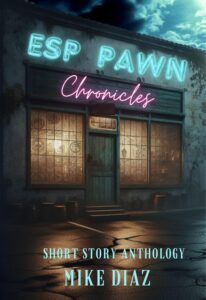
Today, we’re talking with Mike Davis about his book, ESP Pawn Chronicles
 Tell us something unexpected about yourself!
I like musicals.
Why do you write?
I like to put my imagination on paper. I like it when I can take people on a journey.
Where did you get the inspiration for your current book?
Working in a Pawnshop.
What do you enjoy the most about your genre?
I love that I can write about anything.
How would you describe your writing process?
Panster but with a little outlining to point me In the right direction.
What do you think authors have to gain from participating in social media?
Exposure and sales.
 What advice would you have for other writers?
Keep writing.
How do you select your books’ titles and covers?
I use the story to get the title and design my own covers.
What’s your next step?
The Prequel.
How do you react to seeing a new review for your book?
Always happy to see them.
FIND MIKE’S BOOK ON AMAZON
Apr 3, 2025 | Editors' Blog, Editorial reviews, International Review of Books, Literary, YA
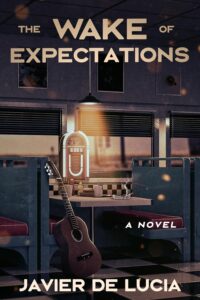
The Wake of Expectations by Javier De Lucia is perfect for readers who appreciate emotionally intense, unconventional coming-of-age stories that reward patience with a raw and resonant exploration of identity, adolescence, and the messy realities of growing up.
.
Which line stood out from all the others in the book?
So many relationships over the years, some positive, others negative. Some to do with coming-of-age adolescent behavior, definitely, as well as misguided attempts to achieve certain goals (getting laid, etc). One sentence in particular begins the start of one semi-friendship: “There were moments of genuine camaraderie over the years, but the friendship usually was tenuous at best”. (I’d probably call it superficial).
 General Summary for Context:
This novel brims with characters—friends, flings, frenemies, and fleeting encounters—woven through a narrative that spans years of change and growth. At the center of it all is Cal, our dry-witted narrator, who’s just learned that his parents have won the lottery (cue envy), and that he’s been accepted into his dream college. You’d think he’d be celebrating. But no—Cal is too busy reflecting.
Told in his signature self-deprecating tone, Cal’s story is less about triumph than it is about navigating the chaos of life: parties, heartbreaks, awkward encounters, moments of connection and confusion. The novel unfolds as a patchwork of seemingly insignificant events that, together, chart the messy process of growing up.
Some might call it a coming-of-age story. To me, it feels more like a rude awakening—especially when, after a rollercoaster of emotional highs and lows, Cal finds himself asking, “Wait… what happened to the money?”
Concise Review:
This is a highly original and engaging journey into the life of one (seemingly average?) young man. At first, I struggled to keep track of the many people he meets and how they shape—or slip through—his life. The sheer number of encounters can feel dizzying, and initially, I felt the main character lacked depth. But as the story unfolded, I realized that might be the point: he’s still figuring himself out, stumbling through a maze of interactions, often awkward, sometimes tender, and frequently tinged with confusion.
Coming from a family of all girls, I may simply be more familiar with the emotional dramas of growing up female. The adolescent male experience portrayed here—hormonal, uncertain, occasionally crass—felt unfamiliar and, at times, jarring. But it’s also raw and honest in a way that’s hard to look away from.
This isn’t a tidy coming-of-age tale—it’s messier, funnier, and sometimes more frustrating. But it’s real. Maybe that’s what makes it resonate, even if it takes a moment to adjust to the rhythm of the world the author has created.
General Thoughts on the Novel:
 Initially, the sheer volume of characters and shifting relationships made the narrative somewhat difficult to follow. However, once I began keeping a mental ledger of who was who and how each individual related to the protagonist, the story gradually drew me in. The emotional turbulence, the fleeting connections, and the often-conflicted decisions began to cohere into something compelling.
In particular, I found myself deeply frustrated—perhaps even incensed—by the events toward the end, particularly the loss of the money (a mild spoiler, though its impact is central to the story’s arc). That sense of frustration underscored how emotionally involved I had become. I wanted to shake certain characters, to urge them into self-awareness and maturity. In doing so, I realized the narrative had achieved something significant: it had made me care.
This is not a conventional coming-of-age tale. It is raw, sometimes chaotic, and frequently disorienting. But beneath that surface lies a poignant meditation on adolescence, identity, and the often-painful process of growing up. Once emotionally invested, the story resonates with clarity and meaning—and that, perhaps, is the clearest indication that it is a work of real merit.
READ JAVIER’S BOOK ON AMAZON