Oct 27, 2025 | Interviews, Horror, Mystery, Thriller
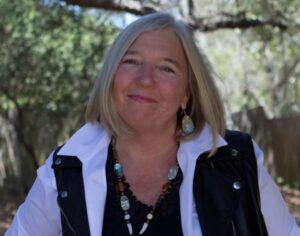
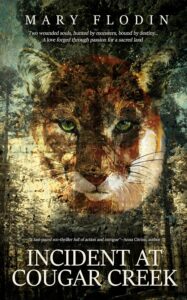
Today, we’re talking with Mary Flodin about her book, Incident at Cougar Creek
 Tell us something unexpected about yourself!
I’m a potter & a poet
Why do you write?
I knew by the time I could write my name that I was born to be a writer. Writing is my imperative.
 Where did you get the inspiration for your current book?
During the Covid pandemic, I hiked nearly daily alone in the Santa Cruz mountains on the Central California coast, on land originally inhabited by the now-disappeared Cotoni Ohlone people. Walking on the land, I had visions and heard voices. A story grabbed me and demanded to be told. I wrote every morning and hiked in the afternoons. Each time I walked by a certain mysterious oak grove, characters appeared to me and told me things about themselves and their story. It became clear that the story had to do with mountain lions, a sensitive and threatened native animal only protected in two US states, California and Florida, and considered vermin everywhere else in the country. I was able to contact the head of the Santa Cruz Puma Project at the University of California Santa Cruz, and he gave me a two hour phone interview about mountain lion conservation issues he wished the public could be made aware of. I determined to include this information in my novel.
The first vision I had was of a murdered woman lying under the oaks. It was startling, needless to say. I “saw” her several times before finally stopping to speak to her. She “told” me she was a California Indigenous woman and that her people had lived in Southern California and Baja Mexico for millennia. She “said” that their elders, many of whom didn’t speak English, were barely aware of the border between the US and Mexico, and when they traveled on ancestral wilderness trails from San Diego to visit relatives in Mexico, and then tried to return, they were detained by ICE at the border, and were in need of medicines and desperate to be reunited with their families. Based on this information, I searched for the imaginary murdered woman’s people online and found a match—The Kumeyyaay Nation. Although I’m a native Californian (mostly Swedish, Welsh, Irish descent), I had never heard of the Kumeyaay. I tried to contact them through the Native Studies Department at UC San Diego but because of the Covid pandemic, everything was closed. After working on the first draft of the novel for about a year, I came to believe it would be inappropriate for me to write a story about the Kumeyaay without permission, so I decided to quit writing and shelve the project. The next time I hiked, an actual real flesh and blood mountain lion trotted across my path. I froze. The young male puma stopped, looked me in the eye, and “said,” “Well, we thought you were going to tell our story. It’s important that people know. You’re not giving up are you?” So I resumed writing. Eventually, the pandemic shut-down ended, and I was able to travel to Southern California to visit with the Kumeyaay. Here is a video documenting that visit: https://youtu.be/bcFtZJf3nvg?si=m9W0D0h6gdD4Wxru More about the Kumeyaay here: https://youtu.be/d_Z9wSMNkA0?si=mrrVvn2m5C39vfN7 I feel very honored, grateful, and humbled to have been given the opportunity to tell this story. I hope I got it right. Eyay e’Hunn — My heart is good.
What do you enjoy the most about your genre?
I care deeply about social and environmental justice. Socially engaged fiction, cli-fi or climate fiction, environmental or ecological literature with social justice and environmental justice themes—this is where my heart and mind live. Writing within the commercial genres of mystery/thriller/suspense, romance, and speculative/paranormal/magical realism/fantasy allows me to reach wide swaths of readers who might not yet have encountered some of the issues and ideas that concern me. I hope to open hearts and minds, walking that razor’s edge of balancing heavy issues with a positive, hopeful, entertaining spin. Going off into the speculative realms, activating the imagination, opens up possibility so much more. More about why I write cli-fi eco-thrillers and romantasy here: https://maryflodin.com/
How would you describe your writing process?
Intuitive, hypnotic, visionary, disciplined, driven, compelled, emboldened, liberating. I usually “see” scenes unfold and “hear” dialogue as if I were watching a movie. I write in a small room in my home, seated at my computer under a skylight. I come to the writing at about 7:30 each morning, do a short gratitude meditation, check in on the totems, tchotchkes, and little writing Gods that sit on shelves near my computer, focus my gaze up to the sky, and the muses fly in and start downloading.
What do you think authors have to gain from participating in social media?
Writing is a solitary activity. We need community.
What advice would you have for other writers?
If you have a story to tell, do not put it off. Sweep away everything else you think you should do, and make time to write.
How do you select your books’ titles and covers?
In collaboration with friends, family, publisher, mentors
What’s your next step?
There will be launch parties, social media doings, etc. Then . . . Breathe deeply. Clean my house, tend my garden, exercise, swim, hike, take a break from the verbal modality and move into the visual/tactile: make pottery and plein air oil paintings. Spend time with friends and family. Read and watch movies. Laugh. Dance.
What book do you wish you had written?
Outlander
How do you react to seeing a new review for your book?
Amazed
FIND MARY’S BOOK ON AMAZON
Sep 5, 2025 | Interviews, Mystery, Thriller
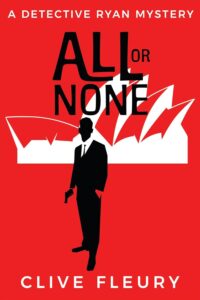
Today, we’re talking with Clive Fleury about his book, All or None
 Tell us something unexpected about yourself!
When I was about ten, I spent a year trying to learn the violin. It was a disaster. I hated the instrument, and the instrument hated me.
Why do you write?
I have to write because if I didn’t, I could slide into a deep depression and drink myself silly.
 Where did you get the inspiration for your current book?
I stay for part of the year in Potts Point, Sydney, Australia, which is entirely coincidentally where Detective Ryan, the hero of my book, lives. I imagine the people he must see, think about their lives, and then draw inspiration from all of that.
What do you enjoy the most about your genre?
A cozy mystery thriller like my latest book, All or None, is precisely the sort of book I like to read. They usually have both good and complex characters, twists galore, and an ending which leaves me scratching my head and thinking: Why didn’t I see that coming?
How would you describe your writing process?
Hard and extremely time-consuming.
What do you think authors have to gain from participating in social media?
Social media allows you to quickly and easily connect with an audience of potential readers who may never have heard of you or your books.
What advice would you have for other writers?
If necessary, force yourself to write, as the rewards of seeing the book in print make it all worthwhile in the end.
How do you select your books’ titles and covers?
There’s something in each book that supplies a pithy phrase that goes to the heart of the story.
What’s your next step?
My next book in the Detective Ryan Mystery series – Never Enough. I’m writing it now and it will be out after All or None.
What book do you wish you had written?
There are far, far too many brilliant books in the world, so just choosing one is, for me, impossible.
How do you react to seeing a new review for your book?
I cross my fingers before I read the review, and hope like hell that the reviewer hasn’t been too unkind.
FIND CLIVE’S BOOK ON AMAZON
May 15, 2025 | Mystery, Interviews, Thriller
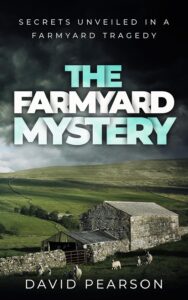
Today, we’re talking with David Pearson about his book, The Farmyard Mystery
Tell us something unexpected about yourself!
I have written twenty-five crime fiction novels set in Ireland, published since 2018. Before writing crime fiction, my job entailed writing very long and detailed procedural manuals for the financial services industry for licensing purposes. I also wrote for an IT trade magazine in the 1980s. But neither of these led me into crime fiction novels. I’m a keen amateur photographer, and love shooting landscapes in the West of Ireland. It’s a very special place to me.
Why do you write?
The ideas keep flowing – I have a need to put them down on paper and share them with readers.
Where did you get the inspiration for your current book?
From the beautiful scenery around Westport in Connemara. The locale is a character in all of my books, and adds to the story.
What do you enjoy the most about your genre?
There’s an endless font of ideas available, and sometimes, fiction is stranger than truth!
How would you describe your writing process?
I have no set timetable, but I try to get at least 1000 words a day written when I’m in the zone. I try to write three books a year, if possible.
What do you think authors have to gain from participating in social media?
A wider spread in terms of publicity. Interaction with readers. Connection with other authors, and identification of trends in the market.
 What advice would you have for other writers?
Just write – lots and lots. Don’t overthink it, and don’t bring in too many characters to your story. That can confuse readers very easily. Keep at it – don’t procrastinate – just write!
How do you select your books’ titles and covers?
I get the covers professionally designed, and the titles tend to follow a theme, such as Murder on/in/at ….. or The XXX Mystery. Titles are very important. They impact sales a lot. I’m not delighted with all of the titles that have been used on my work, but those were decided by my publisher.
What’s your next step?
I want to write more of the current series, and maybe revisit some of the previous series that were very successful, such as The Galway Homicides, which has 15 books in all, or The Dublin Homicides, which has six books.
What book do you wish you’d written?
Books by Ian Rankin in the Rebus series or the IMP___ series by Ray Clarke. Wonderfully crafted and great stories too.
How do you react to seeing a new review for your book?
I’m thankful to everyone who takes the time to review the books – even the negative reviews. I can learn from them, too, though, thankfully, they have been few and far between.
FIND DAVID’S BOOK ON AMAZON
May 15, 2025 | Interviews, Mystery, Women's
Tell us something unexpected about yourself!
I grew up in the Australian bushland.
Why do you write?
To express myself in ways I normally wouldn’t in my everyday life.
Where did you get the inspiration for your current book?
Old movies with strong female leads – All About Eve, Mildred Pierce and that 80s classic, Working Girl.
What do you enjoy the most about your genre?
My genre is hybrid (women’s/suspense/literary) so I’d like to be a bit of a magpie – enjoying the best of all worlds.
How would you describe your writing process?
Write – and re-write again!
What do you think authors have to gain from participating in social media?
I see the writing process as a way of interacting with readers anyway- so social media is an added bonus.
 What advice would you have for other writers?
Keep on trucking.
How do you select your books’ titles and covers?
A bit like the way I write. It takes me a few reviews to come up with the right one.
What’s your next step?
I have a few projects on the stocks. I’m trying to decide which one to prioritise.
What book do you wish you’d written?
The Old Man and the Sea.
How do you react to seeing a new review for your book?
It depends on the review! Seriously, I’m pleased that someone has taken the time to leave feedback.
FIND JULIA’S BOOK ON AMAZON
Mar 4, 2025 | Editors' Blog, 1st pages, Contemporary, Mystery, Paranormal
 Life was good. Dorothy and I danced the days away. I had enough money to party without worrying about the wolf at the door. And, Dorothy… well, Dorothy was Dorothy. I’ve never known another woman like her. To say that she followed my lead wouldn’t be accurate; she was miles ahead. We joined everything; Dorothy even joined the local women’s football club. And she was good. I can’t remember seeing a better player.
And don’t get the wrong idea about Dorothy: she was pretty. So pretty that I was the envy of the neighbourhood. Would Dorothy like to come to this? Would Dorothy like to come to that? Well, she always would, but I always came too. Dorothy only wanted to go if I went, even if it was to cheer from the sidelines.
And, although I don’t like to make a big thing of it, I was handsome in a rugged sort of way – and I liked the girls (my word, how I did), but why should I look further than my Dorothy? And why should she look further than me? Exactly: we were happy, fulfilled and, although I’m repeating myself, life was good. Edmund and Dorothy Goodchild were envied the town over. You’d expect that, wouldn’t you?
**********
We admitted Dorothy Goodchild in December, just before Christmas. It was really sad, a time of revelry – but it wasn’t a happy time for Dorothy or for her husband. I gather she’d always been the belle of the ball. But, now, she wasn’t. You could tell she had been a great beauty, but now, she was very pale. And she stared straight ahead of her. And she rarely spoke, mostly nodded or shook her head. Just that staring, washed-out face; it was unnerving, really, but I never thought that she suffered. Her husband suffered more. If you asked her about the ‘good times’ – that’s how her husband referred to them – she’d smile but never speak about them. Yes, her calm, lifeless beauty seemed as if it were a mask fitted on the wrong face. It was more appropriate to a dancing queen – which she had been.
She came to Old Lodge Nursing Home in December, as I said. I don’t know what caused the stroke. Some people bounce back from a stroke – my father did. Dorothy didn’t. She spoke, when she did, from the side of her mouth and her face slanted sort of sideways.
But Edmund’s love for her shone through. The other guests of the home loved him. He would come in every day as if they would never be separated – and perhaps they never will. Of course, he could never look after her at home, but he seemed to be separated from her only at night. Perhaps it would have been nice if they could have had a room together. But he was hardly a suitable person for a nursing home, even if his wife was.
Edmund was a popular visitor in more than one way. He was very good-looking. My word, some of our guests couldn’t take their eyes off him, the female ones that is. But everyone admired his devotion; they thought he could hardly have had any life of his own. I mean, what did he do when he got home? Make himself some tea – baked beans or boiled eggs would have been about the limit, I guess, and he always had his lunch in the home. He ate well.
He was often in the kitchen. He shouldn’t have been of course, but no one felt they wanted to tell him that. I remember he advised them what would be best for his wife. Surprisingly, the cooks didn’t seem to mind that, but he did it so politely. He was quick to tell them they knew their job and he was just a troublemaker. He wasn’t, and they didn’t think he was. As I say no one took exception.
I remember one girl – a very pretty girl – that he always spoke to. She was actually one of the nursing staff, but she had heard that Dorothy liked scones. Apparently, her sister had made them for her – and they were special ones. He told the girl how to make them. His sister-in-law had told him.
And the girl was frequently with Dorothy, and she gave her the scones she had made. She made them nearly every day. But, funnily enough, I never saw Dorothy eating them. But then I had other guests to look after; I couldn’t be around Dorothy all the time. I saw Edmund eating them; yes, I did, several times. Anyway, who cares about the scones?
Dorothy began to go out in her wheelchair. That was a good sign: well, Edmund took her out, and the girl who made scones went with them. What a rock he was for Dorothy. Although she did not show much pleasure in the “walks”, well, in anything really.
The other guests were really concerned for him. Well, maybe they just loved Edmund and didn’t think he had much of a life. Which, he didn’t of course.
**********
I know they think I am a vegetable, that I don’t think, speak – or dream. But I do. Very definitely, I do all those things. I wake up in the morning, knowing that Edmund will arrive and I… well, I think, this is another day without promise, without a future for me.
I do remember our wonderful days together, at a time when he was everything to me when I was everything to him. It was because we meant everything to each other that life meant so much. Now, it seems, he continues to mean a great deal to those around him – to the guests and to the pretty girl who makes him scones – yes, I don’t deceive myself that she makes them for me.
But he does not arrive with delight, seeing me as his morning awakening. How could he, and how could I blame him for that? I am not what I was – and he is the same to others. But to me he is just always there, always at my side. It is almost as if (this sounds terrible I know) he would make me happier by leaving me alone for a while. Perhaps for a long while. It would disappoint all those in the home, including the nurses and, of course, the guests as they are called. And I know he is sacrificing his life for me. But…’
**********
The days became longer and stretched as if all were one long day for Edmund – coming in, sometimes, as early as seven o’clock in the morning, when he would get breakfast cooked by the kitchen staff. And, when Dorothy was made ready, he took her out, increasingly with the girl nurse who admired him as much as anybody – more perhaps. Maybe the relief of having someone to talk to relieve his burden of an unresponsive wife, although he never showed any signs of that burden. He just chatted, very friendly, to the girl and continued to live his sterile existence.
Well, that was until the day the nursing home experienced the only major event since my husband and I had taken it over.
They had come back from their walk and the girl had gone off to make scones – and I noticed she had made some other cakes – perhaps to whet Dorothy’s appetite. I don’t know whether it did or not but that wasn’t the important matter. What caused such anxiety – and horrified me – was that Edmund looked very pale. Very poorly.
I hadn’t paid them much attention until Dorothy slumped back in her chair – and Edmund grasped his throat. Our medical staff rushed to them. But Dorothy just looked asleep. Edmund was clearly very sick indeed.
**********
‘Why didn’t he listen? Perhaps he hadn’t put his hearing aids in. He was so careless about that, and I kept telling him he would get something wrong as a result.
I watched it all; well, of course I did. My future life depended on it. I liked Edmund, but even more, I liked the idea of a comfortable life with someone who was obviously very fond of me… I couldn’t help feeling that he was sick of coming in every day. I wondered if he did it to see me. Of course, he couldn’t make that obvious.
And now? Well, the scones and cakes that were to provide me with a future husband had deprived me of one. And Dorothy? I don’t think she even ate one, although she put on one of her usual dying swan acts. I hadn’t wanted it to appear that Edmund and I were becoming close – although we were – but I had clearly told him not to eat any of the scones or cakes that day.
If it had been Dorothy, no one would have worried too much. No great investigation would have been made – it all would have been put down to her weak heart. That was what I was relying on anyway.
‘But, in my final days at the nursing home – there weren’t many before they took me away – Dorothy seemed a new person. She even began to walk unaided. And I heard that she was thinking of leaving the nursing home and going back to the home she had shared with Edmund. Without Edmund it would have been a colourless place. But, maybe Dorothy had changed the way she thought about her husband – although that wasn’t justified. His devotion was genuine. Why should he not enjoy the company of a pretty girl who apparently adored him. Because I am pretty, and many men would have loved to marry me.
But I won’t be when I get out of this hole.
.
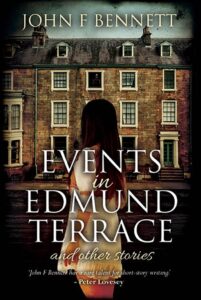
Read Events in Edmund Terrace by John Bennett on Amazon.
Jul 18, 2024 | Editors' Blog, Interviews, Mystery, Romance
Today, we’re talking with Donna B. Comeaux about her book, Breathe for Me
Tell us something unexpected about yourself!
The most unexpected thing about me is my tenaciousness to complete and publish my novel. It’s quite an accomplishment. And I’ve enjoyed every moment of this journey.
Why do you write?
I write because there would be nowhere for the crazies to go that are inside my head.
Where did you get the inspiration for your current book?
Every Breath You Take by Judith McNaught.
What do you enjoy the most about your genre?
Because there are so many subgenres, writers now have the freedom to be more creative. Romantic suspense can encapture bad villains and include whimsical fantasies or unleash dragons. It really excites me to be able to explore this amount of creativity without the boundaries that once held us back.
How would you describe your writing process?
My writing ritual requires me to get up before sunrise to check my social media platforms, then begin work on the rewrites of my next novel. It’s literary fiction. I hope to launch it by early 2025.
What do you think authors have to gain from participating in social media?
If you exude patience and do it right, authors can gain meaningful relationships through social media. But it takes time, one person at a time. Being authentic is key. I’m not at all good at this and it’s taken me a while to accept the fact that I must heavily invest in this part of book marketing.
 What advice would you have for other writers?
I encourage all writers to do two things: never give up on their dreams, and perfect your writing in every way possible. Proofread your work. It’s the only representation of you that your readers see.
How do you select your books’ titles and covers?
I usually begin writing a book with a theme in mind, and from that theme comes my title. I will sometimes sit for hours just working on the title. And there have been times that I won’t begin writing until the title is firm in my mind.
What’s your next step?
I’m presently working on a literary fiction novel that I hope to release in early 2025. After that, I have a crime and detective novel halfway finished that I would love to complete. I have many stories I’ve started, so I’m not short of ideas or projects to work on.
What book do you wish you’d written?
Not so much a book but a style of writing. I want to one day write a book that George Orwell refers to as windowpane writing. To write that clear and concise fascinates me.
How do you react to seeing a new review for your book?
Nothing excites me more than receiving new book reviews. I get to hear everyone’s viewpoint of the book. I learn a lot from my readers. I’ve even thought of new ideas for a book while reading them. Most of all, they make me smile.
FIND DONNA’S BOOK ON AMAZON